Body Language in Interviews: 9 Signals Recruiters Notice in the First 30 Seconds
By Rehearsa Team · 2026-06-16
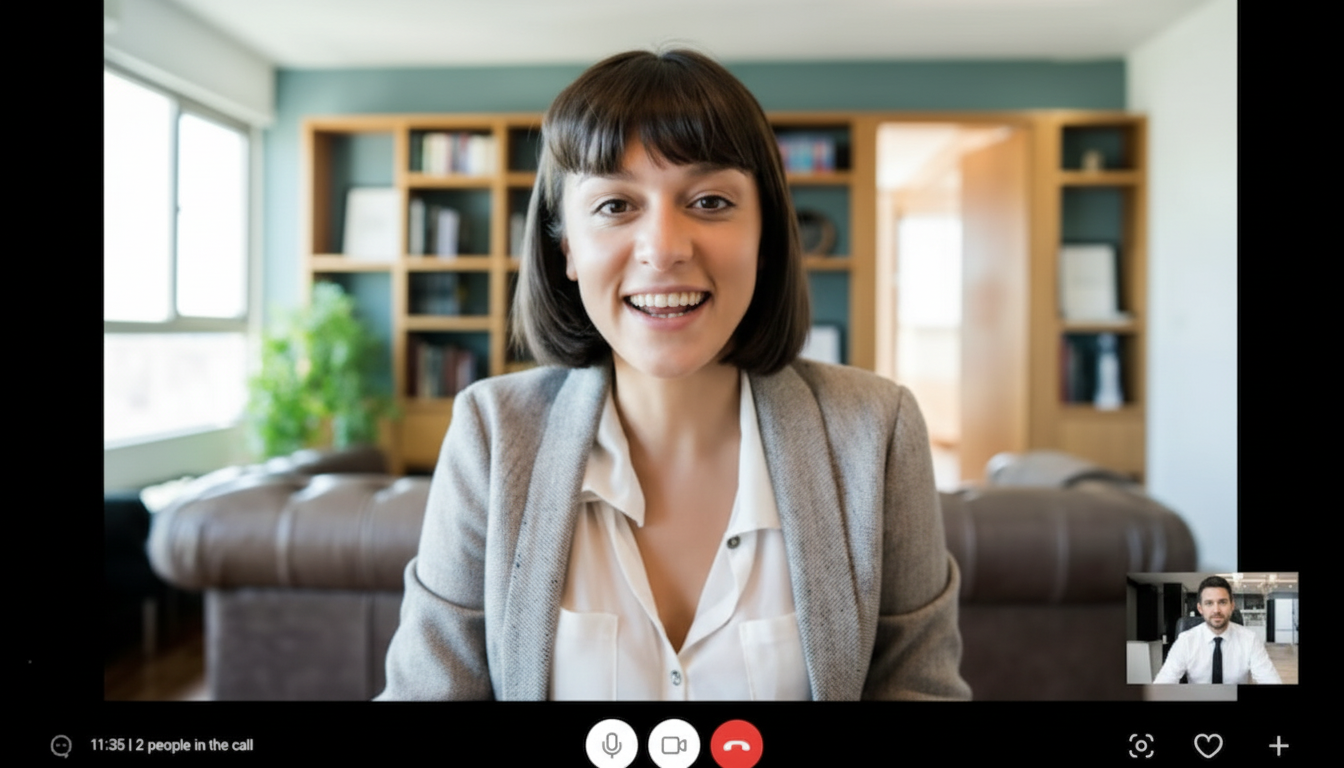
Recruiters decide whether they like you in under 30 seconds. That judgment is almost entirely non-verbal — posture, eye contact, the energy you bring into the room (or onto the Zoom tile). The good news: every one of these signals is trainable.
Here are the 9 body language cues hiring managers consciously and subconsciously read in the first half-minute of an interview, why each one matters, and exactly how to fix yours.
1. Your entrance (or your camera-on moment)
The interview starts the second you become visible. In-person, this is your walk to the chair. On video, it's the moment your camera turns on.
What recruiters notice: Pace, shoulder position, whether you look up or down, and whether you smile before you sit.
Fix it: Walk in (or join the call) at a deliberate, unhurried pace. Drop your shoulders. Smile before the first word — it resets your own nervous system and signals warmth.
2. Eye contact — and the 60% rule
Too little eye contact reads as evasive. Too much feels intense and rehearsed. The sweet spot most communication research lands on is around 60% eye contact while speaking, 70-80% while listening.
Fix it: On video, look at the camera lens (not the other person's face on screen) during your key sentences — opening, closing, and any number or proof point. In person, anchor on the bridge of the nose if direct eye contact feels uncomfortable.
3. Your posture in the first three seconds
A slouched torso compresses your diaphragm, which makes your voice quieter and shakier — which makes you sound less confident, which then makes you less confident. It's a loop.
Fix it: Sit forward, hips slightly back in the chair, sternum lifted, feet flat on the floor. Imagine a string pulling the crown of your head toward the ceiling.
4. The handshake (or its remote equivalent)
In person, a limp or overly aggressive handshake is a near-universal red flag. Remote interviews have a parallel: the opening greeting — your tone, the lift in your voice, and a clear, warm "Hi, [name] — thanks for making the time."
Fix it: Practice the first sentence out loud five times before the call. It is the single highest-leverage line you will say.
5. Hand placement when you're not speaking
Idle hands are loud. Recruiters notice fidgeting with pens, hair, jewelry, or sleeves — and they read it as anxiety, even when it's just habit.
Fix it: Park your hands. On video, rest them lightly on the desk in frame. In person, fold them loosely in your lap or rest them on the table. Move them intentionally when you gesture, then return to neutral.
6. Facial micro-expressions while listening
Most candidates rehearse what they'll say. Almost none rehearse what their face does while the recruiter is talking. A flat, frozen expression reads as disengaged. Over-nodding reads as anxious.
Fix it: Soft eyebrows, slight smile at neutral, small natural nods at the end of the recruiter's sentences. Watch a recording of yourself — you'll be surprised.
7. Shoulder and chest openness
Crossed arms, hunched shoulders, or a turned-away torso all read as defensive or closed. Open chest and squared shoulders read as confident and engaged.
Fix it: Pull your shoulder blades gently back and down. Keep your chest open to the camera or the interviewer. Don't cross your arms — even if you're cold.
8. Vocal pace and pauses
Body language includes how you sound. Speaking too fast in the first 30 seconds is the single most common nervous tell — and it makes you forget half of what you wanted to say.
Fix it: Take a slow breath before your first sentence. Aim for roughly 140-160 words per minute. Use deliberate pauses where you'd normally say "um." Silence reads as confidence.
9. Energy level matched to the role
The right energy depends on the company. A startup PM interview rewards visible enthusiasm. A bank or law firm interview rewards calm, measured presence. Showing up with mismatched energy — too flat or too hyped — feels off, even if every word is right.
Fix it: Watch 2-3 videos of people at the company before the interview. Match their pace, volume, and warmth. Then dial your natural energy slightly above theirs — never below.
How to actually practice this
Reading about body language doesn't change it. Recording yourself does. Specifically:
- Record a 60-second answer to "tell me about yourself."
- Watch it on mute first. Would you hire that person based on what you see?
- Then watch with audio. Does the voice match the visual?
This is exactly what Rehearsa's AI interview practice does automatically — it measures your eye contact, posture, and presence on every answer using your webcam, and gives you a per-signal score so you can see what recruiters see.
The 30-second checklist
Print this. Run it before your next interview:
- Shoulders down and back
- Smile before the first word
- Eyes on camera lens (or interviewer's eyes) for the opening
- Slow first breath, slow first sentence
- Hands parked, ready to gesture intentionally
- Open chest, no crossed arms
- Soft, engaged face while they speak
- Energy matched to the company
- End the opening with a confident pause — not a rushed exhale
You will not nail all nine on day one. You don't have to. Recruiters aren't grading a checklist — they're forming a feeling. Fix three of these and the feeling changes.
Want a per-answer body language score the next time you practice? Try a free interview on Rehearsa and see your eye contact, posture, and presence measured on every question.